What to Burn Instead of Sage: 11 Herbs for Smoke Cleansing
Smoke Has Memory
Forget the mass-produced sage bundles.
Before incense came in neat little packages, it was a fistful of bitter leaves, cracked resin, and whatever could be burned in a dish over coals.
Smoke cleansing in folk magic is the ritual burning of herbs or resins to cleanse space, banish harmful energy, carry prayers to spirits, or mark life transitions.
Traditional smoke work used local plants — juniper in the Balkans, mugwort in Slavic rites, frankincense in North African temples — chosen by purpose, not trend.
Smoke has always been more than perfume. It was language. Offering. Defense. Invitation.
If you’re unsure whether your ritual counts as smoke cleansing or something else entirely, read Smoke Cleansing vs. Smudging. It explains the cultural differences with clarity and respect, so your practice stays rooted in your own lineage and land.
Avoid dangerous and sometimes deadly mistakes when working with smoke: make sure you read Herbs You Should Never Burn in Ritual.
Contents
- Why Smoke Matters in Folk Magic
- 11 Safe Herbs for Ritual Smoke
- Sourcing Herbs Responsibly
- How to Perform the Ritual
- FAQ
Jump to Herb: Myrrh • Juniper • Pine • Copal • Rosemary • Mugwort • Frankincense • Dragon’s Blood • Garden Sage • Artemisia annua • Yarrow
The Function of Smoke in Magic
Not just symbolic — smoke moves things.
- Cleanses places of stagnant, harmful, or lingering energy
- Carries prayers or messages to spirits and deities
- Protects by creating a spiritual barrier around the practitioner
- Summons entities during ritual (carefully)
- Marks transitions — births, deaths, seasonal thresholds
The type of herb burned shapes the purpose. The timing, the way it’s lit, even the direction you waft it matters in folk tradition.
Traditional Smoke Cleansing Herbs From Around the World
1. Myrrh (Commiphora spp.) — Africa & Middle East
Dark, thick resin used in mourning rituals, death work, and binding ceremonies. Strongly connected to sorrow, passage, and sacred endings.
Folk Practice: Used in combination with frankincense in Egyptian embalming and funerary rites to anchor the soul for transition.
2. Juniper (Juniperus spp.) — Balkans & Northern Europe
Spicy, sharp, and powerful. Burned in rural Balkan homes to banish illness, curse energy, or even unwanted spirits.
Folk Practice: In Montenegro and northern Albania, entire rooms were fumigated with juniper during funerals or illness outbreaks.
3. Pine (Pinus spp.) — Global North
Bright, cleansing smoke from abundant evergreen needles. Used across Europe, North America, and Asia for purification and protection. No sustainability concerns — harvest fallen branches only.
Folk Practice: In Russian folk magic, young pine needles were burned on New Year’s Eve to “smoke out” old spirits. In Appalachian tradition, pine knots fueled cleansing fires after illness.
4. Copal (Protium spp.) — Mesoamerica
Golden, citrus-sweet resin from the torchwood tree. Used by Maya and Nahua peoples for purification, protection, and offering since pre-Columbian times. Today central to Mexican Día de los Muertos ofrendas.
Sourcing Note: Choose Mexican community-sourced copal (often sold as “Santo Domingo” or “Chiapas” copal) rather than mass-produced “blends.” This supports traditional harvesters rather than industrial exporters.
Folk Practice: Burned on charcoal during ofrenda preparation; the smoke creates a path for ancestral spirits to return. In Maya ritual, offered at crossroads to clear heavy energy.
5. Rosemary (Rosmarinus officinalis) — Mediterranean
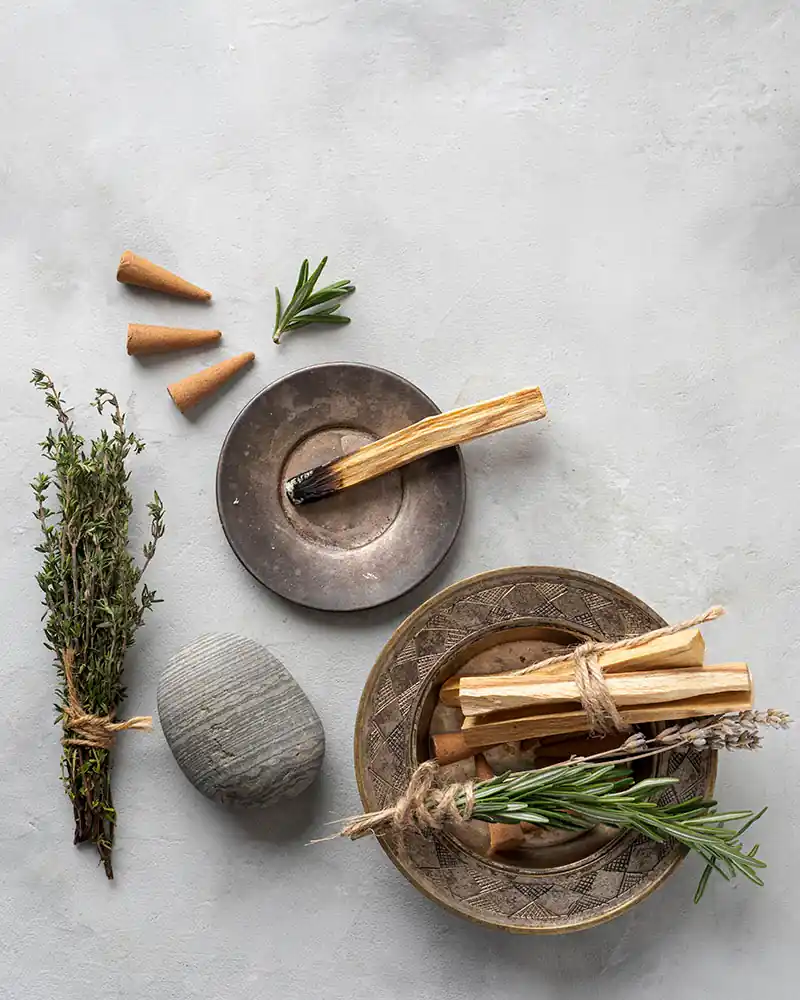
Sharp, clean smoke for protection, memory, and clarity. Used in funerals, weddings, and exorcisms across Europe. Easily cultivated, no wild harvesting needed.
Folk Practice: Burned in Greek Orthodox churches and by Spanish curanderas to ward off evil spirits and cleanse the sick.
6. Artemisia vulgaris (Mugwort) — Slavic & European Traditions
Burned to open dream gates and guide between the worlds. Used after childbirth, near graves, or at midsummer for protection.
Folk Practice: Slavic women would burn mugwort near cradles or braid it into garlands to hang over doors on Ivan Kupala night.
Slavic women would burn mugwort near cradles or braid it into garlands to hang over doors on Ivan Kupala night.
Beyond smoke rites, mugwort also appears in fertility and womb magic traditions, where it was worn, burned, or brewed to regulate cycles and invite conception.
Explore its reproductive and lunar associations in Fertility Herbs Used in Witchcraft.
7. Boswellia sacra (Frankincense) — North Africa, Arabia
Used to summon spirits, carry prayers, and clear deep spiritual residue. High, bright, and temple-like.
Sourcing Note: Choose Somali or Ethiopian community-harvested frankincense (often labeled “Maydi” or “Beyo”) rather than mass-market “church incense” which may use inferior species or unethical middlemen. Sustainable harvesting means tapping trees lightly, not stripping them.
Folk Practice: Burned in Somali postpartum rituals and Egyptian offerings to the gods. A clean-burning resin for sacred clarity.
8. Dragon’s Blood (Daemonorops draco) — Indonesia
Deep red resin from rattan palms, not endangered trees. Used in Middle Eastern and European protection magic. Cultivated and sustainably harvested.
Folk Practice: Burned for love spells, protection, and to amplify other magical ingredients. Less historically “temple” than frankincense, but powerful and ethical.
9. Garden Sage (Salvia officinalis) — Mediterranean
NOT White Sage Common garden sage, distinct from sacred White Sage (Salvia apiana). Used for purification and wisdom in European folk magic. Grows easily in gardens, no wild harvesting concerns.
Folk Practice: Bundled and dried in English cottage witchcraft for “smoking out” illness and bad luck from the home.
10. Artemisia annua — China, Balkans
A sharper cousin of mugwort, burned to ward off disease and malicious spirits. Especially potent in ancestral rituals or protection rites.
Folk Practice: Hung and burned during Chinese Ghost Festival. In parts of the Balkans, tossed into ritual fires near cemeteries.
11. Yarrow (Achillea millefolium) — Eurasia, North America
Bitter, protective smoke used for divination and boundary-setting. Found wild across temperate zones, easily cultivated in any garden. No harvesting pressure on wild populations.
Folk Practice: In Scottish folk magic, yarrow was dried and burned before battle or legal proceedings for courage and clear sight. Chinese tradition used it for casting the I Ching.
Sourcing Herbs Responsibly
Even “safe” herbs become harmful when overharvested:
- Grow your own: Rosemary, mugwort, yarrow, garden sage
- Choose cultivated over wild: Pine needles from your yard, not old-growth forests
- Support communities: Somali frankincense, Mexican copal, Indonesian Dragon’s Blood from ethical harvesters
- Avoid: White sage, wild-harvested Palo Santo, and any “trendy” herb sold without origin transparency
How to Perform a Smoke Cleansing Ritual
- Choose Your Herb: Based on intention — protection, healing, spirit work, banishing, dreamwork.
- Prepare the Space: Open windows if indoors. Sweep, tidy, and ground yourself.
- Light with Purpose: Charcoal disc for resins or dry herb bundle. Don’t rush the fire.
- Walk or Waft with Intention: Circle the space clockwise (or counterclockwise to remove/banish). Speak aloud if it helps.
- Close the Ritual: Bury ashes, leave an offering (like water or salt), or sit in silence.
What Smoke Remembers (Final Words)
Smoke travels faster than footsteps and lingers longer than most prayers.
Your ancestors used it to speak across thresholds. Witches used it to mask their spells or draw down spirits. In Balkan barns, they smoked herbs to keep death out. In temples, they used it to invite it in.
Don’t let modern aesthetics rob your rituals of their teeth. Pick herbs that meant something. Burn them like you mean it.
If you work with smoke, keep notes — which herbs respond, which resist, and which remember you.
And always ask — who’s watching, and what are you clearing space for?
Want To Improve Your Witchy Herbs Knowledge?
Check out:
Frequently Asked Questions On Ritual Smoke Cleansing:
Is smoke cleansing safe to do indoors?
Yes, if done carefully. Always ventilate, use fire-safe containers, and avoid toxic or resin-heavy herbs in enclosed spaces. Never burn toxic plants (oleander, henbane) or essential oils on charcoal indoors. See Herbs Not Meant for Burning.
Can I mix different herbs together?
Traditionally, yes — but with intention. Combining herbs layers effects, but conflicting purposes (summoning + banishing) should be avoided.
How often should smoke cleansing be done?
Only when needed. In folk traditions, smoke was used for thresholds, illness, conflict, or spiritual disturbance — not daily routine.
What’s the difference between smoke cleansing and smudging?
Smoke cleansing is a global practice using various herbs. Smudging specifically refers to Indigenous North American ceremonies using White Sage, cedar, or sweetgrass in traditional ways.
Does smoke cleansing attract spirits?
It can. Some herbs invite, others repel. Know your intention before lighting anything.
What should I do with the ashes afterward?
Bury them, scatter them at a crossroads, or return them to the earth as an offering.
Can I use kitchen herbs for smoke cleansing?
Yes. Rosemary, sage (Salvia officinalis), thyme, and bay leaves from your kitchen have long histories in European folk magic. Just ensure they’re fully dried and never use toxic ornamentals.