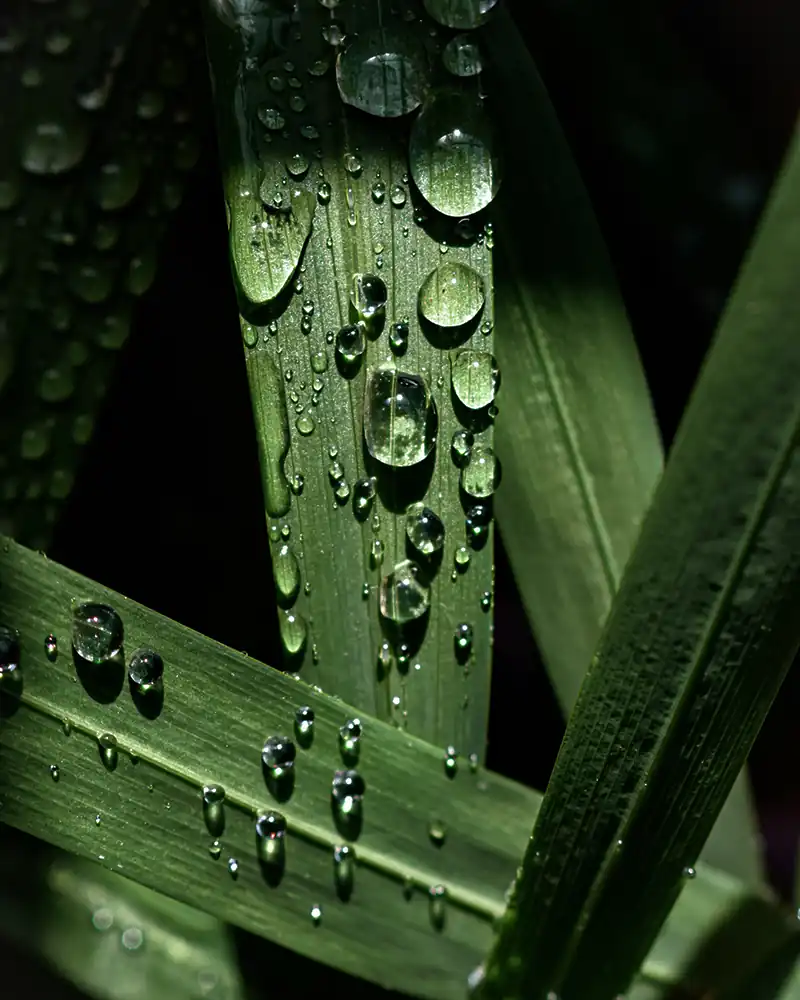
Sacred Dew: Midsummer Magic
The Water That Falls From No River
Before sunrise, while fields still lay under darkness, people walked quietly through wet grass.
They carried cloths, bowls, jars, and sometimes nothing at all.
Some gathered dew from flowers.
Some rolled through it.
Some washed their faces.
Others collected it in silence and carried it home before the sun appeared.
To modern eyes this can seem like a charming rural custom.
Historically, it was much more than that.
Across Europe, dew occupied a strange place in folklore.
Unlike rain, it did not fall from storms.
Unlike rivers, it did not flow from visible sources.
It appeared mysteriously during the night and vanished again with the morning sun.
Because it arrived between darkness and daylight, many traditions treated dew as a substance belonging to thresholds.
It was neither fully earth nor fully sky.
And things found between worlds often acquire unusual power.
Why Dew Became Sacred
Traditional societies paid close attention to seasonal rhythms.
Dew appeared exactly where crops grew.
It settled on medicinal herbs.
It arrived silently during the hours when spirits, dreams, and unseen forces were often believed most active.
Folklore repeatedly connected dew with blessing.
People believed it carried:
- vitality,
- fertility,
- beauty,
- health,
- prosperity,
- and the life-giving force of nature itself.
The belief appears in dozens of forms, but the underlying idea remains remarkably consistent:
What the night leaves behind may contain power.
This was especially true on certain mornings of the year.
May Day Dew and the Promise of Beauty
Few forms of dew folklore became as widespread as the collection of May Day dew.
Across Britain, Ireland, Germany, Scandinavia, and parts of Eastern Europe, people rose before sunrise on the first day of May to gather dew from meadows and flowering fields.
Young women washed their faces with it.
The belief was simple.
May dew preserved beauty.
It prevented blemishes.
It protected the complexion.
In some regions, it was said to ensure attractiveness for the entire year.
The practice survived for centuries.
Folklore collections repeatedly record girls venturing into fields before dawn specifically to wash in May morning dew.
Certain traditions insisted the dew must be collected before anyone else disturbed the meadow.
Others warned that speaking before the ritual reduced its effectiveness.
Silence appears frequently in folk magic.
Words could interfere with power just as easily as they could direct it.
Rolling in the Dew
In parts of Central and Eastern Europe, collecting dew was not enough.
People entered it.
Ethnographic records describe individuals rolling through dew-covered grass before sunrise.
The custom appears especially often in spring and midsummer traditions.
The purpose varied.
Some sought health.
Some sought fertility.
Others hoped to strengthen the body after winter.
Children were sometimes led through dew-covered fields to encourage growth and vitality.
The logic behind these practices reflects a recurring pattern in folk belief.
Dew was not merely water.
It carried the strength of the season itself.
By touching it, a person symbolically absorbed that strength.
Midsummer Dew and the Turning Sun
If May dew belonged to youth and beauty, midsummer dew belonged to power.
Across the Balkans, Eastern Europe, and the Baltic regions, dew collected around the summer solstice acquired extraordinary significance.
Bulgarian Enyovden traditions preserve some of the richest examples.
People gathered dew before sunrise.
Women washed in it for health.
Children passed through dew-covered grasses.
Fields became temporary places of blessing.
In Serbian, Croatian, Polish, Lithuanian, and Latvian traditions, similar beliefs appear surrounding solstice mornings.
The shortest night was considered a moment when ordinary boundaries weakened.
Herbs reached peak potency.
Water gained unusual properties.
Dreams became more meaningful.
Dew participated in this wider seasonal transformation.
Many traditions treated it as a physical manifestation of the solstice itself.
For a few hours at dawn, the world was believed to contain more life than usual.
On the summer solstice night people gathered healing herbs, watched bonfires burn across hillsides, floated wreaths on rivers, and searched forests for signs and omens. More on this truly magic night in Kupala Nights: Balkan & Slavic Solstice Folklore.
Dew, Fertility, and Agricultural Magic
Not all dew customs focused on people.
Many focused on fields.
Agricultural communities depended upon healthy crops, healthy livestock, and favorable weather.
As a result, dew became deeply entangled with fertility folklore.
Farmers watched it carefully.
Heavy dew could be interpreted as a sign of abundance.
Light dew sometimes suggested drought.
In some traditions, dew symbolically represented the fertilizing union of sky and earth.
This symbolism appears repeatedly in seasonal songs, agricultural rites, and folk beliefs throughout Europe.
The field covered in morning dew became an image of life itself.
What nourished grass could also nourish grain.
What nourished grain could nourish entire communities.
The Theft of Dew
Not all dew folklore was benevolent.
Some traditions viewed dew as a resource that could be stolen.
In parts of Eastern Europe and the Balkans, accusations occasionally arose that witches could take fertility from neighboring fields by gathering dew.
Folklore records describe women dragging cloths through dew-covered meadows before sunrise.
The collected moisture might then be wrung out over their own fields or livestock.
The underlying belief was not really about water.
It was about transferring abundance.
The dew represented prosperity.
To remove it symbolically removed luck itself.
Such stories reveal how closely agricultural survival and supernatural belief often intertwined.
Dew and Healing
Folk medicine frequently assigned healing properties to dew.
Certain ailments were treated by washing affected areas with morning moisture collected from particular plants.
Dew gathered from medicinal herbs sometimes carried greater value than ordinary water.
Some traditions specified that the dew must be collected before sunrise.
Others required collection during particular feast days.
The timing mattered.
In folklore, power often resides in moments of transition.
Dawn is one of the greatest transitions of all.
Night leaves.
Day arrives.
The world changes state.
Healing substances gathered at such moments were thought to carry the strength of that transformation.
Dew and the Otherworld
Many traditions treated dew as more than medicine.
It also belonged to the realm of mystery.
Fairies, spirits, ancestral beings, and supernatural visitors frequently appear in folklore during the hours before dawn.
The same fields that provided healing dew were often imagined as places where unseen presences wandered.
In Celtic traditions, dew-covered fairy hills carried particular significance.
Elsewhere, dew sometimes appeared in stories involving spirits, enchanted meadows, or miraculous events.
The connection is not difficult to understand.
Dew transforms familiar landscapes.
At dawn, fields shimmer.
Spider webs become jeweled with droplets.
The ordinary world appears altered.
Folklore often begins where ordinary perception becomes uncertain.
What Dew Meant
Modern readers often ask whether people genuinely believed dew could heal illness, preserve beauty, or carry blessing.
Many undoubtedly did.
But folklore is rarely only about literal belief.
Dew represented something larger.
It appeared without human effort.
It nourished without demanding payment.
It arrived during the quietest hours of the day and disappeared almost immediately.
It embodied abundance, fragility, renewal, and the mysterious generosity of the natural world.
Perhaps that is why so many traditions treated it with reverence.
Not because it was rare.
Because it was temporary.
Every morning offered a small miracle.
Most people simply walked past it.
Others rose before dawn and gathered it while they could.
Frequently Asked Questions
What is May Day dew in folklore?
May Day dew is dew collected before sunrise on the first day of May. Throughout Europe it was associated with beauty, health, youthfulness, and good fortune.
Why did people wash their faces with dew?
Many folk traditions believed dew preserved beauty, protected the complexion, and carried the vitality of spring or summer into the body.
What was midsummer dew used for?
Midsummer dew was associated with healing, fertility, blessing, prosperity, and protection. It was often collected before sunrise on solstice-related feast days.
Did people really roll in the dew?
Yes. Folklore and ethnographic records from various European regions describe people rolling in dew-covered grass for health, strength, fertility, and seasonal blessing.
Could witches steal dew according to folklore?
Some Eastern European traditions claimed witches could collect dew from neighboring fields to transfer fertility, abundance, or prosperity to their own land and livestock.
Why is dew important in folklore?
Dew occupies a unique position between earth and sky, night and day. Because it appears during a natural threshold, many traditions viewed it as carrying special spiritual and symbolic power.