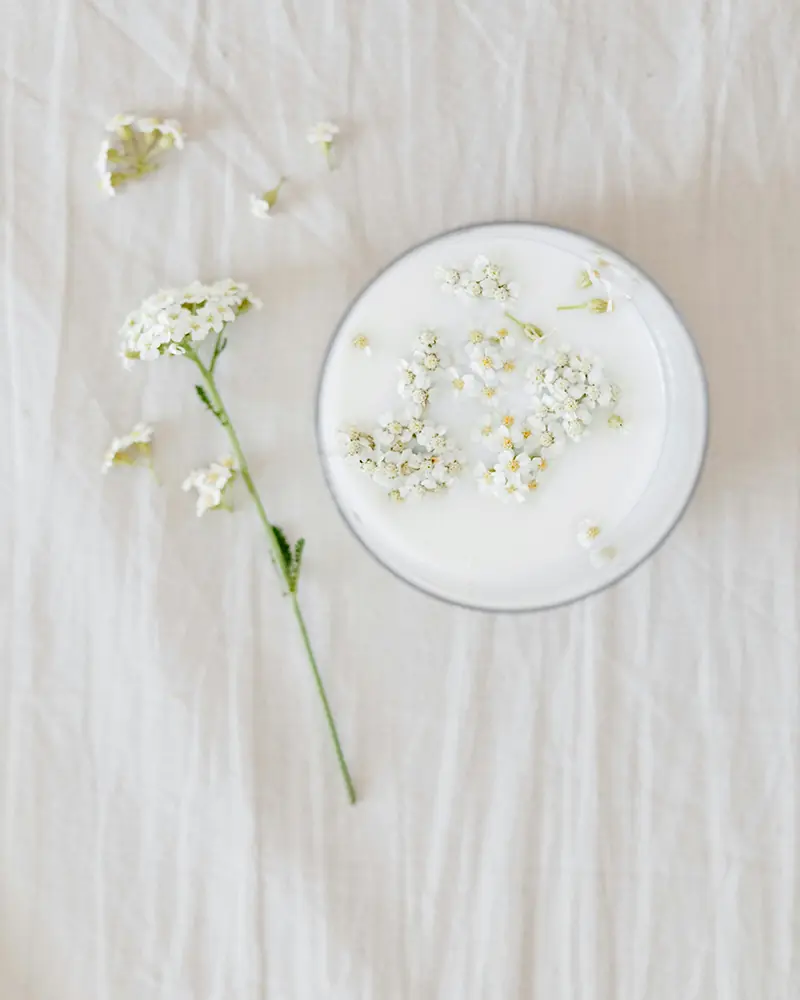
Milk Magic in Folklore: Protection, Fertility, Spirits & the Sacred White Offering
Milk Was Never Just Food
Before refrigeration, before supermarkets, before industrial farming, milk sat at the center of survival.
It fed infants when crops failed.
It carried families through winter.
It became butter, cheese, cream, ritual offerings, funeral food, and sacred nourishment.
A cow that stopped giving milk could mean hunger.
A goat that miscarried could ruin a household.
And because survival depended on milk, people everywhere developed rituals around protecting it.
Milk was treated almost like a living thing: fragile, blessed, vulnerable to envy, and deeply connected to fate.
Across Europe, the Balkans, Central Asia, Africa, and parts of India, dairy traditions became woven into folk magic, household rites, and spiritual protection.
Milk fed not only the living.
It fed the unseen world too.
Ordinary foods, herbs, and household customs became part of women’s fertility traditions. You’ll find them woven into my Folk Fertility Magic: A Guided 4-Month Ritual System.
Rather than presenting isolated spells, it brings together herbal folklore, menstrual rites, moon cycles, ancestral customs, and a step-by-step practice.
The White Substance Between Worlds
In folklore, white substances often occupy strange symbolic territory.
Milk, salt, ash, bone, snow, flour.
All appear repeatedly in rites involving:
- purification
- birth
- spirits
- mourning
- threshold crossing
- blessing
- protection from corruption
Milk belonged especially to liminal moments:
- childbirth
- first milking
- marriage
- funerals
- seasonal transitions
- movement between homes
Because milk came from the body of a living creature, many traditions treated it as carrying part of the animal’s spiritual condition.
Healthy milk meant:
- healthy animals
- healthy women
- healthy land
- divine favor
Spoiled milk could suggest:
- envy
- curses
- witchcraft
- broken household harmony
Milk and the Fear of Witchcraft
One of the most widespread folk beliefs in Europe concerned stolen milk.
Across Scotland, Scandinavia, Germany, Slavic lands, and the Balkans, people believed witches could:
- dry up cows
- steal cream magically
- spoil butter
- redirect abundance from one household to another
This was not abstract superstition.
For agricultural households, dairy failure meant real danger.
In Scandinavian folklore, witches were sometimes said to use magical creatures called milk hares or spirit familiars to steal milk from neighboring farms.
Finnish traditions speak of enchanted objects carrying stolen dairy luck across fields.
In Slavic regions, suspicious knots, buried charms, or strange bundles found near barns were often blamed for milk loss.
Butter failing to churn became one of the classic signs of magical interference.
And so protective rituals emerged.
Protecting the Milk
Across Europe, households used practical and magical protections together.
These included:
- hanging protective herbs in barns
- drawing crosses over milk buckets
- placing iron near dairy vessels
- blessing the first milk of spring animals
- forbidding strangers from touching milking tools
In parts of the Balkans, women circled milk pails with burning embers and smoke, as part of the tradition of using Herbs to Guard Against the Evil Eye and Household Envy.
In Ireland and Scotland, milk was sometimes sprinkled at thresholds before dawn during seasonal festivals.
Among Alpine dairy communities, protective symbols were carved directly into butter molds and cheese presses.
Milk had to remain spiritually sealed.
Because abundance was believed to attract envy.
Protecting milk was never separate from protecting the home itself; it belonged to the same folk system of Threshold Protection Practices Against Spiritual Interference.
Fairies, Spirits, and Milk Offerings
Milk appears constantly in stories about household spirits and fairies.
This pattern stretches across:
- Celtic lands
- Slavic folklore
- Nordic traditions
- Germanic household spirit beliefs
Bowls of milk were left for:
- brownies
- domovoi
- tomte
- house snakes
- fairies
- wandering spirits
These offerings were rarely extravagant.
A little milk. A little cream. A small dish near the hearth.
The exchange was simple: respect for protection.
Many traditions warned that failing to honor household spirits could lead to:
- spoiled milk
- sick livestock
- broken tools
- unrest in the home
But offerings carried danger too.
In some fairy traditions, accepting food from spirits created obligation. Likewise, feeding them carelessly could encourage attachment.
Milk sat directly in the middle:
both gift and contract.
Milk and Fertility Magic
Milk naturally became linked to fertility.
Not only human fertility, but fertility of:
- land
- livestock
- crops
- marriage
- lineage
Across Eastern Europe, dairy products appeared in spring fertility rites tied to renewal and abundance.
In Balkan traditions, newly married couples were sometimes greeted with milk or cream-based foods to bless fertility and household prosperity.
In parts of India, milk was poured over sacred stones and deities connected to life force, motherhood, and cosmic nourishment.
Ancient Mediterranean traditions linked milk with maternal goddesses, animal abundance, and sacred motherhood.
The symbolism was obvious:
milk nourishes life before teeth exist.
It became one of humanity’s oldest symbols of continuity itself.
Milk was only one thread in a much larger tapestry of fertility folklore. If you are starting your own fertility journey, I have something for you!
If you’d like to explore how milk offerings, fertility herbs, menstrual rituals, moon phases, and ancestral practices fit together into a single tradition, the Folk Fertility Magic guides you through a structured 4-month journey, with a Fertility Path Finder to help you choose the practices best suited to your own path.
The Dangerous Side of Milk
Milk was sacred, but also unstable.
It spoiled quickly. Soured unexpectedly. Turned without warning.
Folklore often treated spoiled milk as spiritually meaningful.
In some traditions:
- sudden souring suggested envy
- blood in milk signaled curses or bad omens
- unexplained drying of livestock hinted at spirit attack
Milk also appears in stories involving contamination and taboo.
Among some pastoral traditions, mixing milk improperly with certain foods or ritual states was forbidden.
Milk touched by death, mourning, or childbirth sometimes became ritually dangerous until cleansing rites were performed.
The same substance that represented life could also carry corruption.
This duality made milk spiritually powerful.
Serpents, Milk, and Household Spirits
One of the strangest recurring patterns in Eurasian folklore is the connection between snakes and milk.
Across the Balkans, Baltic regions, Slavic lands, and parts of India, household snakes were sometimes:
- fed milk
- treated as guardians
- associated with ancestors
- linked to land prosperity
In Serbian and Balkan folklore especially, the House Snake was often considered tied to the fate of the household itself.
To harm it risked misfortune.
Milk offerings reinforced peaceful coexistence between human home and protective spirit.
Modern biology tells us snakes do not naturally drink milk.
Folklore did not care.
The symbolism mattered more than zoology.
Milk represented alliance.
Milk at the Threshold of Death
Milk also appears in funeral customs.
In parts of Eastern Europe and the Balkans:
- milk dishes were left for the dead
- dairy foods appeared at memorial meals
- mourners avoided certain milk practices during grief periods
In Celtic traditions, fairies and the dead often overlap symbolically around dairy offerings.
Milk became a bridge substance: nourishing both memory and spirit.
Some traditions believed the dead retained awareness of household offerings for a limited period after death.
Others feared spirits lingering too close to milk stores or livestock.
Again, milk occupied the threshold: life and death touching briefly through nourishment.
Why Milk Became Magical Everywhere
The pattern repeats globally because milk touches nearly every vulnerable part of human survival.
It connects:
- mother and infant
- animal and household
- land and prosperity
- life and decay
And unlike grain or wood, milk changes rapidly.
It transforms. Spoils. Ferments. Separates. Curdles.
People watched these changes daily for thousands of years.
Naturally, they began attaching meaning to them.
Milk became more than nutrition.
It became a living sign of whether harmony between:
- humans
- animals
- spirits
- ancestors
- land
was holding together.
Dairy offerings sit within a much older symbolic pattern connecting nourishment, land, and reproduction in what folk traditions understood as the relationship between Food, Land, and Women’s Fertility Magic.
Milk in Folk Magic Was About Relationship
Modern discussions often reduce folk magic to ingredients.
But milk traditions reveal something deeper.
The rituals around milk were really about maintaining relationships:
- between people and livestock
- households and spirits
- families and ancestors
- humans and land
Protection was not abstract.
It was agricultural. Emotional. Domestic. Communal.
Milk magic was never about theatrical spellcasting.
It was about keeping life flowing.
This Is Not a Modern Ritual Guide
This article documents folklore and traditional beliefs.
It is not an instruction manual for spirit work, offerings, or unsafe food practices.
Many milk customs belonged to highly specific agricultural, seasonal, and ancestral contexts that modern people no longer live within.
Understanding them historically matters more than imitating them blindly.
Frequently Asked Questions
Why was milk associated with witchcraft?
Because dairy failure threatened survival. Across Europe, unexplained loss of milk, butter, or livestock fertility was often blamed on magical theft or envy.
Did people really leave milk out for spirits?
Yes. Milk offerings to household spirits, fairies, ancestors, and protective beings appear widely across European and Eurasian folklore traditions.
Why were snakes connected with milk?
House snakes were often treated as protective spirits tied to the household or ancestors. Milk symbolized peace, prosperity, and reciprocal care.
Was spoiled milk considered a bad omen?
Often yes. Sudden souring, failed butter churning, or unusual milk behavior could be interpreted as signs of spiritual imbalance, envy, or witchcraft.
Was milk sacred in pre-Christian traditions?
Very often. Milk appears in fertility rites, pastoral religion, goddess traditions, ancestor customs, and household blessing rituals across many cultures.
References & Sources
Grimm, Jacob — Teutonic Mythology
Briggs, Katharine — The Fairies in Tradition and Literature
Pócs, Éva — Fairies and Witches at the Boundary of South-Eastern Europe
Ginzburg, Carlo — Ecstasies: Deciphering the Witches’ Sabbath
Frazer, James George — The Golden Bough
Eliade, Mircea — Patterns in Comparative Religion
Räsänen, Matti — Folk Beliefs and Supernatural Traditions in Rural Finland
Vukanović, Tatomir — Serbian Folk Religion and Customs
Hutton, Ronald — The Witch
Davidson, H.R. Ellis — Gods and Myths of Northern Europe